

Of course, wherever life came from there wouldn’t be much point in being alive if it wasn’t for us.
“That’s a bit dramatic isn’t it Albert?”
I mean us as light coming from a star, rather than you and me. Nearly every living thing on earth depends on the light from its nearest star, the sun. 
“Nearly?”
Well I would have said all life until I read that deep in the oceans there are bacteria that live around vents in the ocean floor where hot volcanic water and gas bubble up. They live off the chemical hydrogen sulphide that comes out of these vents. So they are living off chemical energy not light energy and strange giant worms live off them. Mind you, as hydrogen sulphide has the smell of rotten eggs and is just as poisonous as hydrogen cyanide to most life forms, you can hardly call it living.
“Hold on Albert, the rotten egg smell chemical is also in stink bombs isn’t it? It can’t be that poisonous?”
It really is that poisonous, it’s just that it is so smelly that it only takes a miniscule amount to make a good stink. Even 600 molecules of hydrogen sulphide for every million molecules of air could kill you and at that concentration your sense of smell is paralysed so you can’t even smell it. So all in all I’d rather not live near one of the underwater vents. For all rest of life on earth sunlight is the power source. Plants trap the energy from light and with the gas CO2 from the atmosphere and water make sugars.
"But humans don't eat sunlight."
No, but they do eat plants that grow using the sugars they make out of sunlight. Even pure meat eaters like lions eat other animals, that might eat other animals, that might eat even smaller animals, but at some stage the smallest forms of life are ether green or eat something green.
“How do plants use sunlight if we can’t?” The process that plants use to trap the energy from the sun into a chemical form is called photosynthesis, literally making things (the ‘synthesis’ bit) out of light (the ‘photo’ bit). A special molecule called chlorophyll captures photons and uses the energy to make water and CO2 stick together to make sugars and other more complicated molecules. This pigment is green which is why plants are green. The sugars can be converted into all the other things that plants are made of. In potato plants all the excess sugar that is manufactured in the leaves and other green parts of the potato plant is moved underground and stored as starch.
“So a potato is like bottled sunshine.”
That’s right and french fries are deep fried sunshine. When you eat a potato, you release the energy trapped in the sugar and turn sugars back into water and carbon dioxide.
"If animals reverse the process that makes sugar by photosynthesis, why don't they glow when they eat vegetables?"
What a great thought, but animals don't exactly reverse photosynthesis. If they did they would have to give back all the energy as light and so wouldn’t be any better off. Instead they have their own specialised pigments that break down sugar back into water and carbon dioxide but trap the released the energy in the form of a chemical called ATP (adenosine triphosphate) which is the energy currency used in cells. This whole process is called metabolism. The idea that animals might glow when eating is not as odd an idea as it seems. Some bacteria and fungi that live by digesting dead plants and animals do actually glow as they eat. Rotting wood or meat infested with certain bugs can give off a faint bluish light.
"What about fireflies, they glow don't they?"
Yes but when they're mating, not when they are eating. Animals like fireflies have evolved such amazing tricks to produce light that it leaves you wondering how evolution alone could have done it. Fireflies mate at night and use flashes of light to attract one another. Each species of firefly has its own code of flashes so that they can avoid an embarrassing meeting in the dark with the wrong sort of firefly.
“So light is important for reproduction too?”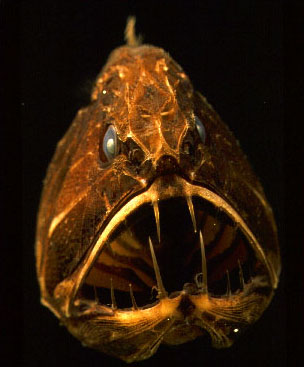 Of course, light helps you to find food, avoid predators and to attract or even find a mate. The beautiful plumage of birds is only there to be seen by potential mates. Most humans choose clothes because of how they look in them. If there was no light, evolution wouldn't have evolved eyes and no-one would care what they looked like. So photons drive the entire fashion industry. Of course some animals live where there is no light or very little light and so they have little vision. There’s an old saying ‘beauty is in the eye of the beholder’, and if there is no-one to do the beholding (or seeing) then why should evolution bother to make you beautiful? This is probably why you don't see many beautiful moles, bats or deep sea fishes. But apart from these creatures that live in very dark places, nearly all animals from the very simplest can react to light. Not all can ‘see’ as you might understand it, but even tiny microscopic organisms can detect light and move towards or away from it.
"So what do you need to be able to see?"
An eye, a brain and a bit of light. A fancy eye is useless if it is attached to a brain the size of a pinhead and any eye is useless if you live somewhere without light. Simple animals only need simple eyes because they are too dumb to need anything better. The simplest eye of all is something that can just tell light from dark, what’s called a light receptor. Next step up is an eye that can tell which direction light is coming from. Simple creatures like flies have compound eyes made up of lots of receptor cells that can tell light from dark. Each receptor points in a different direction so that the pattern of light can be used to see what things are and where they are.
“What about our eyes?”
Human eyes have evolved to a spectacular level of precision. But before you get too proud of your own visual apparatus, you should know that some animals can see things that you can't see. Birds like hawks and eagles can see better than humans. When lunch depends on spotting a mouse while hovering at a hundred feet, good eyesight becomes essential. Lunch for many humans seems to involve reading the label on a sandwich and then guiding it towards the mouth. Not too challenging after all. In many ways it is surprising that humans can see as well as we do. But then, there is more to life than finding the next meal. Seeing better than humans is one thing, but some animals can see the invisible.
“How can you see the invisible? That doesn’t make any sense.”
This might seem impossible until you realise that invisible only means invisible to humans. It's just one of the many perks of being the dominant life form on the planet. You get to name everything and decide what is and isn’t invisible. Bees can see into the ultraviolet spectrum. Ultraviolet is where light gets bluer and bluer and after that seems to disappear. Some flowers, which look boring and white to us, are spectacular in ultraviolet light. Bees might be rather impressed if they knew that humans could ‘see’ red light that was invisible to them. Some snakes, like vipers can see even redder light than humans, what humans call the infrared. This allows vipers to see in the dark. They perform this neat trick with special pits next to their mouths. Handy for vipers, but I don’t suppose the mice they eat are that impressed.
"So are we infrared or ultraviolet or what type of light?"
We’re good old fashioned visible type of light.
“So will we be seen?”
Perhaps, if anyone is looking this way when we finally reach earth in the next few minutes. I guess we’ll just have to wait and see.
Enjoyed it? Then Digg it.
Saturday, September 29, 2007
Light of my Life (and almost every other living thing)
Saturday, September 15, 2007
WHAT IS LIFE? (big questions need big letters)
“So Albert, what's next?”
Next is that little planet called Earth.
“Where is it?”
It's that little gleaming dot ahead of us.
“But it's tiny.”
We're still eight minutes away, about 90 million miles. At this distance the Earth looks like a tiny bright pearl lost in a sea of darkness.
“Don't get poetic on me, Albert. Tell me what makes the Earth so special?” Life. The Earth’s special because it’s full of life. It’s just the right distance from the sun so that it is not too hot and not too cold. It’s also the right size to have enough gravity to keep a breathable atmosphere. Remember Mars, it’s a bit smaller and has been losing it atmosphere for billions of years. The huge planets like Jupiter and Saturn have so much gravity they have a huge, dense atmosphere that isn’t very friendly to life. So the Earth is just in the right place and is just the right size. Right in the middle of that goldilocks zone we talked about before.
"I know this is a silly question…..”
Some of the best questions are, so go on.
“But what is life? How can you tell that something is alive?"
Hmmm…now that is an interesting question. Let’s think about that. Well, most living things move, but not all of them and anyway cars move. So movement can't be the key. Living things grow but then so can stalactites in caves and volcanoes. How about reproducing. That's it; living things reproduce and make new living things.
"So anything that's not reproducing isn't alive?"
Well, you don't have to be always in a constant reproductive frenzy to be alive. I suppose it's the ability or potential to reproduce that's the key to life?
“So if someone couldn’t have babies for some medical reason they wouldn’t be alive?”
Of course humans or any creature can be unable to have children and be alive. I guess reproductive potential is out. What does that leave? Evolution, living things evolve getting better each generation.
"So do soap powders."
They need energy.
"So does an iPod."
They can think and react to things.
“I don’t think grass thinks and that’s alive.”
Hmmm. When you think about, it's surprising tricky to define what life is. It’s easy to say that humans are alive and trees are alive in a different sort of way. To describe life in a simple way that includes everything we think of living but doesn’t include any machines or anything else is surprising difficult.
“What about DNA? Isn't that in all living things?”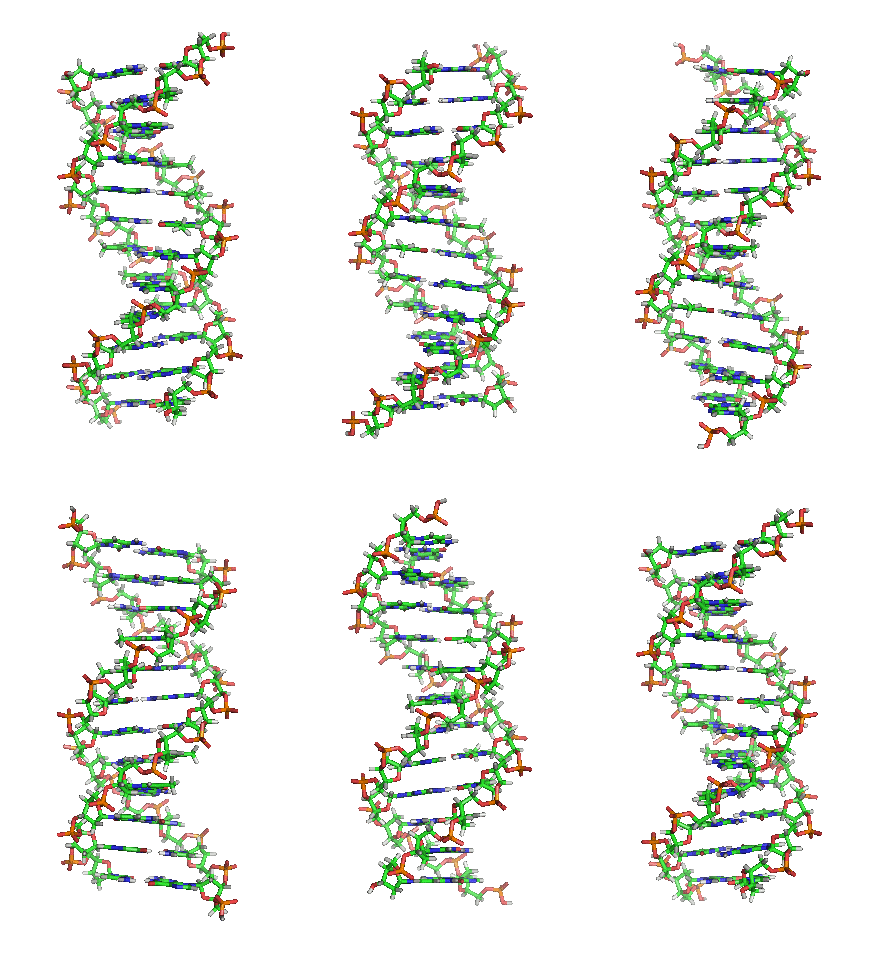 That is true and it is amazing that, on Earth at least, all forms of life use this chemical DNA, which is short for DeoxyriboNucleic Acid. But on its own DNA is just a molecule, a whole load of atoms arranged in this long spiral shape – the famous double helix. DNA contains all the instructions about to how make a living thing and keep it working. There is a very simple sort of alphabet stored in DNA, so simple that it only has four types of letters A, C, G and T. These letters stand for Adenosine, Cytosine, Guanine and Thymidine which are the names of the molecules that DNA is made from. These letters make up three letters words which stores all the information in the DNA. There are only 64 word combinations of these letters so the DNA language is very simple compared to most human languages. The Oxford English Dictionary has 290,000 words. But every bug, person and blade of grass on Earth uses the same DNA language of just 64 words and three of those are ‘stop’.
“So is life DNA?”
It’s used by life on Earth but there could be life on other planets that uses something other than DNA. Even on Earth DNA isn’t alive. You could take the DNA from any living creature and have it in a test-tube but it wouldn’t be alive. When an animal dies you could still extract the same DNA as was there when the animal was alive. So life has to be more than just DNA. DNA is like music printed on a page. All the instructions are there to make a beautiful sound but it needs an orchestra to play the notes. Life is the whole thing, the instructions, the musicians, and the music.
“So if you just record the music on a CD would that be life?”
No because the sound of the music is just the end result. A CD of music is just a copy of what the music sounds like, just like a DVD of a film shows living actors but isn’t alive. The whole complex process of actually making the music is more what life is about. One extra twist is that the printed music in the form of DNA also includes the instructions about how to make the instruments, musicians and everything else needed to make music. Part of the problem in defining life is that there are lots of type of life and so lots of different ways of living.
“What do you mean?”
Well if we start with the smallest living things, there are bacteria. These are tiny little balls of life, so small, about a millionth of a metre across, they can only been seen with powerful microscopes. They have DNA, can move, and can make new baby bacteria. They live almost everywhere. Some bacteria when they start growing inside humans cause disease or infections, but there are lots, literally billions, that live quite happily inside every earthling. But most bacteria live in soil. There is an even simpler form of life that is smaller than bacteria, some are only a few billionths of a metre across and not everyone even thinks they are actually alive. These are viruses that can only live inside other living things. There are even viruses that live inside bacteria.
“So what is the difference between a virus and a bacteria?”
A virus is just a package of DNA (or its first cousin called RNA, ribonucleic acid) surrounded by a capsule usually made of protein. On their own they can’t do anything. They can’t grow, move, reproduce or anything else. All they can do is get inside other living things. The virus then takes them over from the inside and makes new copies of itself.
“Is that all they do?”
That’s it. Going back to my orchestra example, it’s like someone sneaking in and changing the music on the music stands without the musicians noticing so they all start playing a different tune. Sometimes viruses don’t cause much harm to the thing they invade but often they can kill the cell and can cause diseases from the common cold and the Flu to and HIV and the deadly Ebola which is probably the nastiest virus on the planet for humans.
“Why do they exist? What’s the point of just being DNA and making copies of yourself if you don’t do anything else?”
I suppose they exist just because they can. A scientist called Richard Dawkins has come up with the idea of the ‘Selfish Gene’. A gene is set of instructions coded in DNA. His idea is that all living things are just very complicated ways for genes to spread themselves around the earth.
“So viruses are one of the best ways of doing just that.”
That’s right so the real question is why bother with great big complicated animals like humans. It takes humans 30 or so years just to make a few new humans in the form of kids. Then they have to grow up and go through 13 years of school just so they can make some more copies of their DNA by having more kids. During that time they even have lessons on how to avoid making new humans.
“I guess it’s more fun being human than being a virus, but I’m not sure how this fits into the selfish gene theory. Anyway what about all the other living things?”
One up from bacteria in size and complexity is a whole range of living things made up of things called cells, which are still tiny but much bigger than bacteria at a few tens of millionths of a metre. There are three types of these cells; animals, plants and fungi. Even single celled animals (like an amoeba), single celled plants (like algae) and single celled fungi (like yeast in bread) are different enough to tell apart. Single cell plants are green, single animal cells can have little hair-like things on their surface called cilia which lets them move. Fungi are in the middle, not quite an animal but not a plant. From tiny single cell versions, much more complicated living things have been made just by putting together lots of different types of cells. The cells then become specialised so you have brain cells, skin cells and cells that help make bones. That is all humans are, collections of lots of cells working together like a massive city.
“So we're not really all that different from other forms of life. What’s the best type of life to be?”
It depends on how you judge it. For the health and safety of planet then definitely trees; they’re good for the environment and trees have never started a war or created toxic waste dumps. For cleverness humans win, but you would wonder how clever it is pollute the planet you live in. The biggest life form is a fungus. Most earthlings would say the blue whale is the biggest living thing on Earth but they’d be wrong. A fungus has been discovered that lives in the forests of Oregon in North America. This monster fungus, Armillaria ostoyae or the Honey Mushroom, lives mostly underground and is over 3 miles across and could cover more than 1,500 football pitches. A blue whale is only about the quarter of the length of one football pitch.
“So do bigger things have more DNA?”
Surprisingly not. Humans have 3 billion letters in their genetic code but onions have 17 billion. The animal with the largest amount of DNA is the marbled lung fish. This is the sort of thing we are supposed to have evolved from when life left the sea and started living on land. This fish has 130 billion letters in its DNA. But the record so far is a single celled amoeba, so small that you need a microscope to see it, it has 670 billion letters.
“Why?”
There is a lot we don't understand about DNA, like why some creatures have so much and what most of it does. We have a better idea of how the universe started than we do about why a lungfish and an amoeba have so much more DNA than us.