

“So where did all this life come from?”
Excellent question and like all the best questions is very hard to answer. We do know that there has been life on earth for a very long time. The earth is around 4,500 million years old and the first forms of life are thought to have been primitive bacteria that appeared around 3,500 million years ago.
“How can anyone know that?”
 These bacteria left fossilized rocks called stromatolites, scientists know these rocks were made by simple bacteria because they are still alive today in parts of Australia. Here's a picture of them.
“They look like rocks.”
Well spotted, but they are rocks made by the bacteria as they grow.
“So everything came from these rock-making bugs?”
Well not necessarily those exact bacteria but something very similar. The fact that all living things use DNA, the stuff we talked about last time, suggests all life on Earth came from a some simple original life form. That life-form changed and more complicated versions appeared. Over millions of years new life-forms and creatures developed from this very simple start. That’s what evolution is all about.
“The thing that Charles Darwin discovered?”
That’s the one. One of the strongest pieces of evidence for evolution is that DNA alphabet I told you about is shared by every living creature. But Charles Darwin didn’t know about DNA, he developed his theory of evolution by examining the different types of animals on a tiny set of islands in the Pacific Ocean, the Galapagos Islands. He found that birds on different islands had changed so they were best suited to eating particular types of food. From these little changes he suggested that if you string together lots of little changes over millions of years you can explain how any living creature could evolve from a simple common ancestor.
“I can just about believe that all the different forms of life evolved from one very simple creature, with a lot of imagination. But where did that first creature come from?”
Hmm, I thought I might have got away with not answering that question. Where life first came from must rate as one of the universe's really big questions. It’s one of the universe’s big questions exactly because no-one has answered it yet. For most scientists, life came by random chemical reactions over millions of years suddenly kick-starting life.
“Life just started out of the blue by chance? That seems a little unlikely.”
There are plenty of scientists who’d agree and suggest life just happening would be like a hurricane passing through a junk yard and creating a pristine Boeing 747. Or a million chimpanzees randomly hitting keys on a million keyboards and suddenly one of them writes one of Shakespeare’s plays. So some people have suggested that life came from space and landed on Earth from a comet or asteroid. There is another idea that was put put forward by Francis Crick, one of the scientists who discovered the shape of DNA. He suggested that life was deliberately put here on Earth by intelligent space travelling aliens.
“What? Was he mad?”
No, I think it was a well thought out idea if a little unusual. After all our galaxy has been around for billions of years before the Earth even formed, so if life could start once it could start many times.
“So?”
So if it possible for life to start by chance, then it is likely to have happened more than once. As the universe has been in existence about 9 billion years longer than the Earth, it is likely that life started somewhere else first. Crick and his colleague Leslie Orgel pointed out that living things need a very rare element called Molybdenum to stay healthy. This is very rare on Earth but seems much more common in other star systems. So they argued that it was more likely that life started on a planet with lots of molybdenum. This theory has wonderful name of 'Directed Panspermia'.
“Life reaching earth from outer space sounds a bit weird but it doesn’t really answer the question. Even if I believe that, how did life start in outer space?”
You’re absolutely right, life has to come from somewhere and saying life on earth came from another planet doesn’t answer the real question. The real answer is that no-one really knows where life came from. What makes it a bit more believable that life could have developed out of the blue is that some of the molecules that really important for living creatures, like amino acids, have been detected in space dust. There is even alcohol floating around between clouds.
“Couldn’t that just be bits left over from a pub on some planet that blew itself up or got blown up?”
It could be, but these amino acid molecules can be created out of the simple gases found in space. There are 20 different type of amino acid in living things on earth and they are the building blocks of proteins. All those words in the DNA alphabet are instructions to make proteins. Proteins are strings of amino acids and each three letter word in the DNA alphabet tell which amino acid goes where. Proteins are the second most important molecule in living things after DNA. DNA has the instructions, but proteins are the molecules that do all the important jobs in living things.
“Like the musicians in your ‘life as an orchestra idea’.”
Just so. With radio-telescopes, astronomers have found these amino acids in space. The right combination of gases and light can just make atoms combine into these building blocks of life. So at least some of the raw materials are out there in space. Even more interesting was a shower of meteorites that landed in Australia on September 28, 1969. These were collected and investigated by NASA. Remarkably these meteorites contained 90 different types of amino acid including 19 of the amino acid found in living things on earth. So the other 71 types of amino acids that don’t exist naturally on earth can only have come from outer space.
“Alien amino acids?”
Possibly. Another meteorite ALH84001 was found hidden in snow in Antarctica in December 1984. Scientists believe this meteorite was originally blown off the surface of Mars by another large meteorite collision. It became famous when Dr. David McKay from NASA claimed in 1996 that it contained microfossils of tiny bugs showing life on early Mars, but not everyone if convinced about that. The other view is that life is so implausibly and fantastically complicated that it shows someone, like God, must have been involved.
“Could that be true?”
It all comes down to what you believe. Any of the possible explanations of where life came from needs a leap faith, so at the end of the day it depends which way you want to jump.
“Couldn't it be proved one way or another?”
 Well logically there are only two ways of proving it. Finding God and asking him or showing that life really can be created out of a soup of simple chemicals that can be found in space or on planets. Back in 1953 Stanley Miller and Harold Urey showed that these important amino acid molecules might have been made here on Earth. They passed lightning through a mixture of gases that were probably around when the Earth was formed- methane, ammonia and hydrogen. The same gases that are found on lots of planets in the solar system. They showed that the simple building blocks of life could be formed in a single week– amino acids, sugars even the building blocks of DNA. It is a long way from building blocks to people but a billion years is lot longer than a week.
“So going back to my question of how life started.”
To be truthful, I don't know.
“Finally I've got you on something.”
True but to be fair I’m a physicist not a biologist and I am dead, so you have to give me a little credit for that.
Saturday, September 22, 2007
HOW DID LIFE BEGIN (questions just don't get any bigger)
Saturday, September 15, 2007
WHAT IS LIFE? (big questions need big letters)
“So Albert, what's next?”
Next is that little planet called Earth.
“Where is it?”
It's that little gleaming dot ahead of us.
“But it's tiny.”
We're still eight minutes away, about 90 million miles. At this distance the Earth looks like a tiny bright pearl lost in a sea of darkness.
“Don't get poetic on me, Albert. Tell me what makes the Earth so special?” Life. The Earth’s special because it’s full of life. It’s just the right distance from the sun so that it is not too hot and not too cold. It’s also the right size to have enough gravity to keep a breathable atmosphere. Remember Mars, it’s a bit smaller and has been losing it atmosphere for billions of years. The huge planets like Jupiter and Saturn have so much gravity they have a huge, dense atmosphere that isn’t very friendly to life. So the Earth is just in the right place and is just the right size. Right in the middle of that goldilocks zone we talked about before.
"I know this is a silly question…..”
Some of the best questions are, so go on.
“But what is life? How can you tell that something is alive?"
Hmmm…now that is an interesting question. Let’s think about that. Well, most living things move, but not all of them and anyway cars move. So movement can't be the key. Living things grow but then so can stalactites in caves and volcanoes. How about reproducing. That's it; living things reproduce and make new living things.
"So anything that's not reproducing isn't alive?"
Well, you don't have to be always in a constant reproductive frenzy to be alive. I suppose it's the ability or potential to reproduce that's the key to life?
“So if someone couldn’t have babies for some medical reason they wouldn’t be alive?”
Of course humans or any creature can be unable to have children and be alive. I guess reproductive potential is out. What does that leave? Evolution, living things evolve getting better each generation.
"So do soap powders."
They need energy.
"So does an iPod."
They can think and react to things.
“I don’t think grass thinks and that’s alive.”
Hmmm. When you think about, it's surprising tricky to define what life is. It’s easy to say that humans are alive and trees are alive in a different sort of way. To describe life in a simple way that includes everything we think of living but doesn’t include any machines or anything else is surprising difficult.
“What about DNA? Isn't that in all living things?”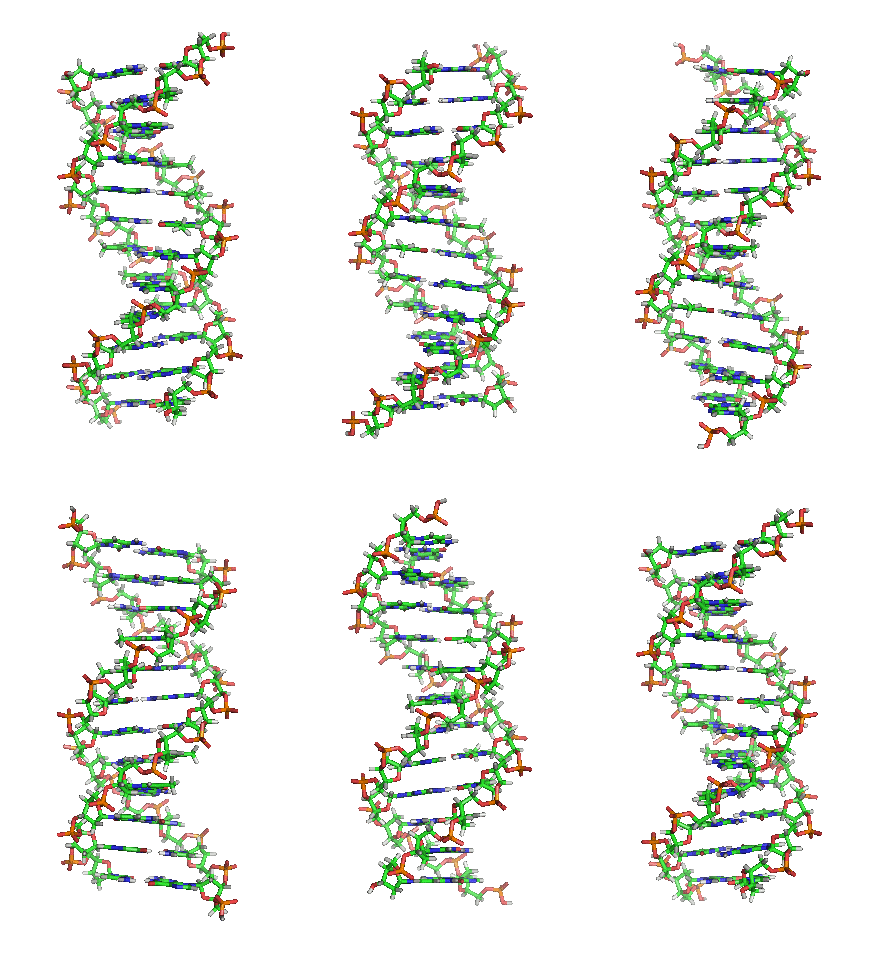 That is true and it is amazing that, on Earth at least, all forms of life use this chemical DNA, which is short for DeoxyriboNucleic Acid. But on its own DNA is just a molecule, a whole load of atoms arranged in this long spiral shape – the famous double helix. DNA contains all the instructions about to how make a living thing and keep it working. There is a very simple sort of alphabet stored in DNA, so simple that it only has four types of letters A, C, G and T. These letters stand for Adenosine, Cytosine, Guanine and Thymidine which are the names of the molecules that DNA is made from. These letters make up three letters words which stores all the information in the DNA. There are only 64 word combinations of these letters so the DNA language is very simple compared to most human languages. The Oxford English Dictionary has 290,000 words. But every bug, person and blade of grass on Earth uses the same DNA language of just 64 words and three of those are ‘stop’.
“So is life DNA?”
It’s used by life on Earth but there could be life on other planets that uses something other than DNA. Even on Earth DNA isn’t alive. You could take the DNA from any living creature and have it in a test-tube but it wouldn’t be alive. When an animal dies you could still extract the same DNA as was there when the animal was alive. So life has to be more than just DNA. DNA is like music printed on a page. All the instructions are there to make a beautiful sound but it needs an orchestra to play the notes. Life is the whole thing, the instructions, the musicians, and the music.
“So if you just record the music on a CD would that be life?”
No because the sound of the music is just the end result. A CD of music is just a copy of what the music sounds like, just like a DVD of a film shows living actors but isn’t alive. The whole complex process of actually making the music is more what life is about. One extra twist is that the printed music in the form of DNA also includes the instructions about how to make the instruments, musicians and everything else needed to make music. Part of the problem in defining life is that there are lots of type of life and so lots of different ways of living.
“What do you mean?”
Well if we start with the smallest living things, there are bacteria. These are tiny little balls of life, so small, about a millionth of a metre across, they can only been seen with powerful microscopes. They have DNA, can move, and can make new baby bacteria. They live almost everywhere. Some bacteria when they start growing inside humans cause disease or infections, but there are lots, literally billions, that live quite happily inside every earthling. But most bacteria live in soil. There is an even simpler form of life that is smaller than bacteria, some are only a few billionths of a metre across and not everyone even thinks they are actually alive. These are viruses that can only live inside other living things. There are even viruses that live inside bacteria.
“So what is the difference between a virus and a bacteria?”
A virus is just a package of DNA (or its first cousin called RNA, ribonucleic acid) surrounded by a capsule usually made of protein. On their own they can’t do anything. They can’t grow, move, reproduce or anything else. All they can do is get inside other living things. The virus then takes them over from the inside and makes new copies of itself.
“Is that all they do?”
That’s it. Going back to my orchestra example, it’s like someone sneaking in and changing the music on the music stands without the musicians noticing so they all start playing a different tune. Sometimes viruses don’t cause much harm to the thing they invade but often they can kill the cell and can cause diseases from the common cold and the Flu to and HIV and the deadly Ebola which is probably the nastiest virus on the planet for humans.
“Why do they exist? What’s the point of just being DNA and making copies of yourself if you don’t do anything else?”
I suppose they exist just because they can. A scientist called Richard Dawkins has come up with the idea of the ‘Selfish Gene’. A gene is set of instructions coded in DNA. His idea is that all living things are just very complicated ways for genes to spread themselves around the earth.
“So viruses are one of the best ways of doing just that.”
That’s right so the real question is why bother with great big complicated animals like humans. It takes humans 30 or so years just to make a few new humans in the form of kids. Then they have to grow up and go through 13 years of school just so they can make some more copies of their DNA by having more kids. During that time they even have lessons on how to avoid making new humans.
“I guess it’s more fun being human than being a virus, but I’m not sure how this fits into the selfish gene theory. Anyway what about all the other living things?”
One up from bacteria in size and complexity is a whole range of living things made up of things called cells, which are still tiny but much bigger than bacteria at a few tens of millionths of a metre. There are three types of these cells; animals, plants and fungi. Even single celled animals (like an amoeba), single celled plants (like algae) and single celled fungi (like yeast in bread) are different enough to tell apart. Single cell plants are green, single animal cells can have little hair-like things on their surface called cilia which lets them move. Fungi are in the middle, not quite an animal but not a plant. From tiny single cell versions, much more complicated living things have been made just by putting together lots of different types of cells. The cells then become specialised so you have brain cells, skin cells and cells that help make bones. That is all humans are, collections of lots of cells working together like a massive city.
“So we're not really all that different from other forms of life. What’s the best type of life to be?”
It depends on how you judge it. For the health and safety of planet then definitely trees; they’re good for the environment and trees have never started a war or created toxic waste dumps. For cleverness humans win, but you would wonder how clever it is pollute the planet you live in. The biggest life form is a fungus. Most earthlings would say the blue whale is the biggest living thing on Earth but they’d be wrong. A fungus has been discovered that lives in the forests of Oregon in North America. This monster fungus, Armillaria ostoyae or the Honey Mushroom, lives mostly underground and is over 3 miles across and could cover more than 1,500 football pitches. A blue whale is only about the quarter of the length of one football pitch.
“So do bigger things have more DNA?”
Surprisingly not. Humans have 3 billion letters in their genetic code but onions have 17 billion. The animal with the largest amount of DNA is the marbled lung fish. This is the sort of thing we are supposed to have evolved from when life left the sea and started living on land. This fish has 130 billion letters in its DNA. But the record so far is a single celled amoeba, so small that you need a microscope to see it, it has 670 billion letters.
“Why?”
There is a lot we don't understand about DNA, like why some creatures have so much and what most of it does. We have a better idea of how the universe started than we do about why a lungfish and an amoeba have so much more DNA than us.